A discussion with author Michael Winstead, August 2026
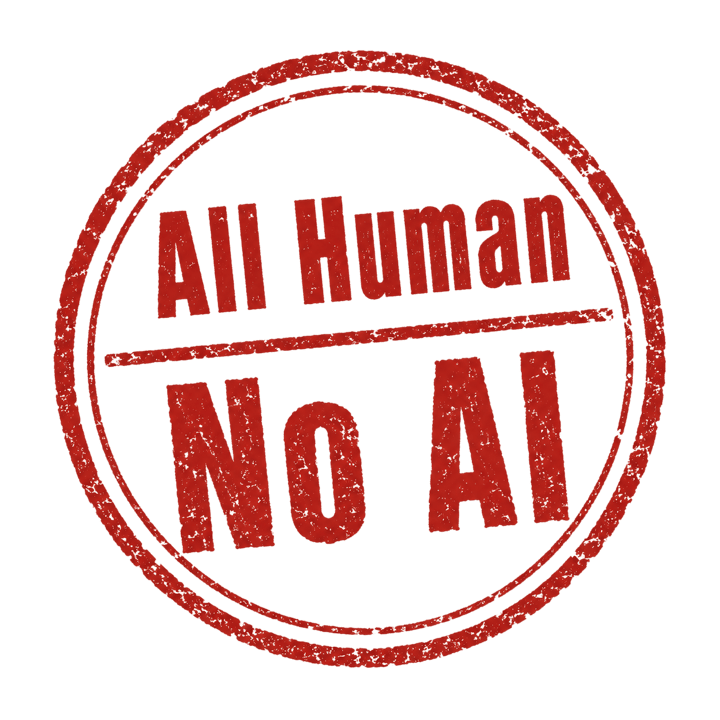
I recently sat down with author Michael Winstead to discuss why and how he avoided using AI in writing his new book, The China Play. Following are excerpts from our conversation:
Q: Thanks for making time to chat. First, let me congratulate you on The China Play, which is a thrilling read – but very different from your previous Ultimate series. Why the change?
A: The Ultimate series has a lot of legs… Raleigh Westlake and his cabal could keep dispensing vigilante justice and evading the law indefinitely. But I wanted to explore a new storyline… still in the legal realm but adjacent to international espionage.
The central character, Walker Hitchcock or “Hitch,” is at a crossroads. His license to practice law has been suspended for a year, so he decides to retreat to the family farm and help out his parents. Once “back home,” he encounters unexpected crimes hidden in legal wormholes. He’s the perfect guy to solve the problem.
Q: Yes, Hitch gets more than he bargained for and so do the criminals. But we don’t want to spoil the book for other readers. Let’s talk about your writing process… and why you avoid using AI.
A: Within the writing community, there are wide-ranging views on the use of AI. Many believe that using AI for checking spelling and grammar is fine. Some even feel it’s okay to use generative AI to come up with story ideas, plot twists, and character development.
I fall somewhere in the middle. I do use AI to spellcheck, although in my experience it’s less than perfect. If you have a good grasp of grammar, AI isn’t helpful because many of its suggestions are inaccurate. I absolutely do not use AI for story ideas, plot development, or character design. Nor do I use it as an editorial assistant, as some do. I also make sure my cover designers do not use AI in designing my book covers.
Q: Why is that?
A: I avoid AI because I believe the human brain is more creatively complex and imaginative than AI can ever be. AI can write by mimicking the work it has digested… but it cannot take a sudden turn and twist a plot in a never-before-seen direction. In its current iterations, which are progressing so quickly this interview may be irrelevant within a few months, AI simply takes “scraped” material and either summarizes or writes to the mean. What it produces is, in my opinion, average.
I’ll give you an example. I asked AI to write a synopsis of The Ultimate Verdict, my first novel. AI got it wrong. Based on the result produced, it appears the program scanned the promotional materials from my website and Amazon, but did not digest the book itself. AI then produced an expected ending based on all the legal thrillers it has digested, but that is not at all how my story ends. I try to be unpredictable because I believe readers want stimulating original stories, not reprocessed content.
Q: That makes sense on a conceptual level, but original ideas are hard to come by. What is your process?
A: I read constantly. I spend quiet time with my characters and have conversations with them. Yes, as a child, I had imaginary friends [chuckling]. I study whether the contemplated scenes are consistent with who my characters are. I invent. I create. It’s a lot more fun, and rewarding, to create your own stories and characters. If you’re using AI to generate your plot ideas or characters, you’re missing out on the most rewarding part of the creative process.
Q: How do you know if AI is using your novels to build its models?
A: I’m not a well-known writer yet, but most writers wonder whether their work is being misappropriated by AI. First, I copyright my stories and register the copyrights in the United States. When The China Play came out, my assistant asked AI to write a synopsis. AI got the plot all wrong. It started from the blurb copy, but when it couldn’t find middle and ending plot points, it hallucinated them. The synopsis went off in predictable directions like an amalgamation of hundreds of other legal thrillers. It described a government conspiracy leading to a predictable courtroom drama. But it couldn’t guess what Hitch actually encountered or how he responded. So AI didn’t read my book. In some ways, I find that encouraging.
Q: Do you think readers can distinguish between human and AI-generated fiction? And do you think many care?
A: Yes, and some. I think regular readers will continue to recognize and appreciate original plots and characters. Occasional readers may not be able to identify junk food or care if they consume it.
Unfortunately, stats show the ratio of regular to occasional readers is declining. But it’s my hope that human-generated content will be increasingly prized over time much like audiophiles have returned to vinyl records for analog sound.
Q: Any final thoughts about the future of novel writing in an increasingly AI-generated world?
A: Some writers may think resistance to AI is futile. But I write for those who appreciate authentic dialogue, clever turns of phrase, intricate storylines, subtle juxtapositions, unusual plot twists, and poignant conclusions. AI gives you a short-cut, but at the cost of authenticity. I won’t succumb.


Leave a comment